
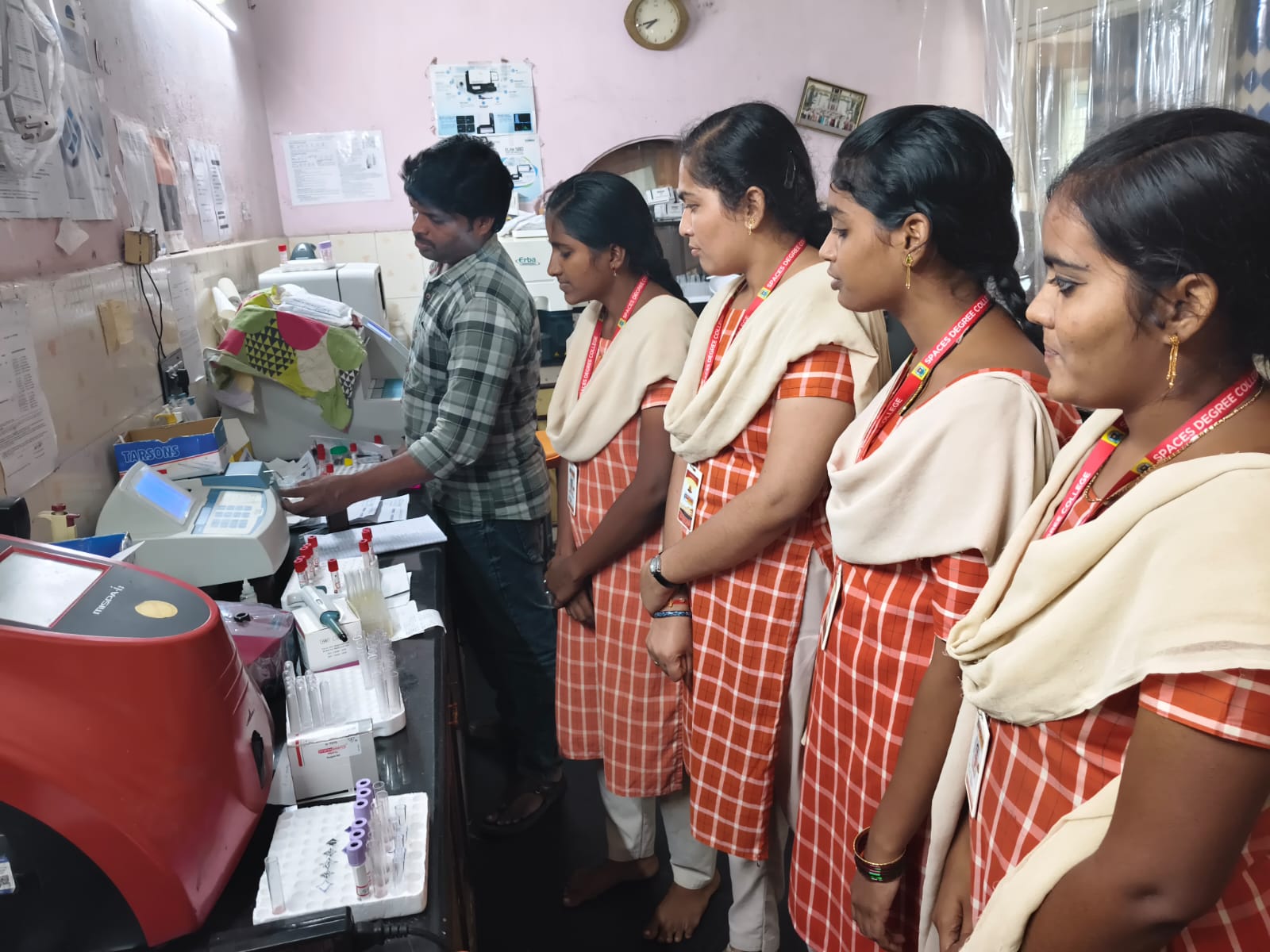
On 10 December 2025, the II B.Sc. (Hons.) Zoology, B.Sc.Biochemistry (Minor) and B.Sc. (Hons.) Biotechnology students of SPACES Degree College (A), Payakaraopeta visited Abbai Doctor Clinical Laboratory, Tuni, with which the institution has an academic collaboration. The visit was organized to provide students with practical exposure to the functioning of a clinical diagnostic laboratory and to bridge the gap between classroom learning and real-world laboratory practices.
During the visit, students were introduced to the organization and functioning of a clinical laboratory, including sample collection, labeling, transportation, processing, analysis, reporting, and maintenance of patient records. The laboratory staff explained the importance of maintaining accuracy, reliability, safety, and confidentiality at every stage of diagnostic testing.
Students observed various aspects of clinical pathology, clinical biochemistry and diagnostic procedures, including the collection and handling of blood, urine, and other biological samples. They gained an understanding of commonly performed investigations such as complete blood count (CBC), blood glucose estimation, lipid profile, liver and kidney function tests, urine analysis, and other biochemical and hematological investigations.
The visit also provided practical exposure to the use of laboratory instruments and diagnostic equipment. Students learned about the basic principles and applications of equipment such as microscopes, centrifuges, automated analyzers, and other laboratory devices. They were introduced to the importance of proper calibration, maintenance, quality control, and careful interpretation of test results.
The students also learned about microbiological and pathological techniques, including the basic principles of identification of microorganisms, preparation and examination of specimens, staining procedures, and the role of laboratory investigations in the diagnosis and monitoring of diseases. The importance of sterilization, disinfection, biomedical waste management, and infection-control practices was also explained.
Special emphasis was given to laboratory safety and professional ethics. Students learned about the appropriate use of personal protective equipment (PPE), safe handling of biological specimens, prevention of contamination, proper disposal of biomedical waste, and precautions to be followed while working with potentially infectious materials. They also understood the importance of maintaining patient privacy and ethical standards in clinical diagnostics.
The visit helped students understand how laboratory investigations support disease diagnosis, treatment decisions, health monitoring, and preventive healthcare. It also enabled them to appreciate the career opportunities available to Zoology and Biotechnology graduates in clinical diagnostics, biomedical laboratories, research, biotechnology, and allied healthcare sectors.
The interaction with the laboratory professionals was highly informative and provided students with an opportunity to clarify their doubts and understand the practical applications of concepts studied in their academic curriculum. The visit was a valuable experiential learning activity, enhancing the students' scientific knowledge, laboratory awareness, technical skills, and professional outlook.
Management and students expresses its sincere appreciation to the Management and staff of Abbai Doctor Clinical Laboratory, Tuni, for their valuable cooperation, guidance, and support in making the educational visit meaningful and successful.