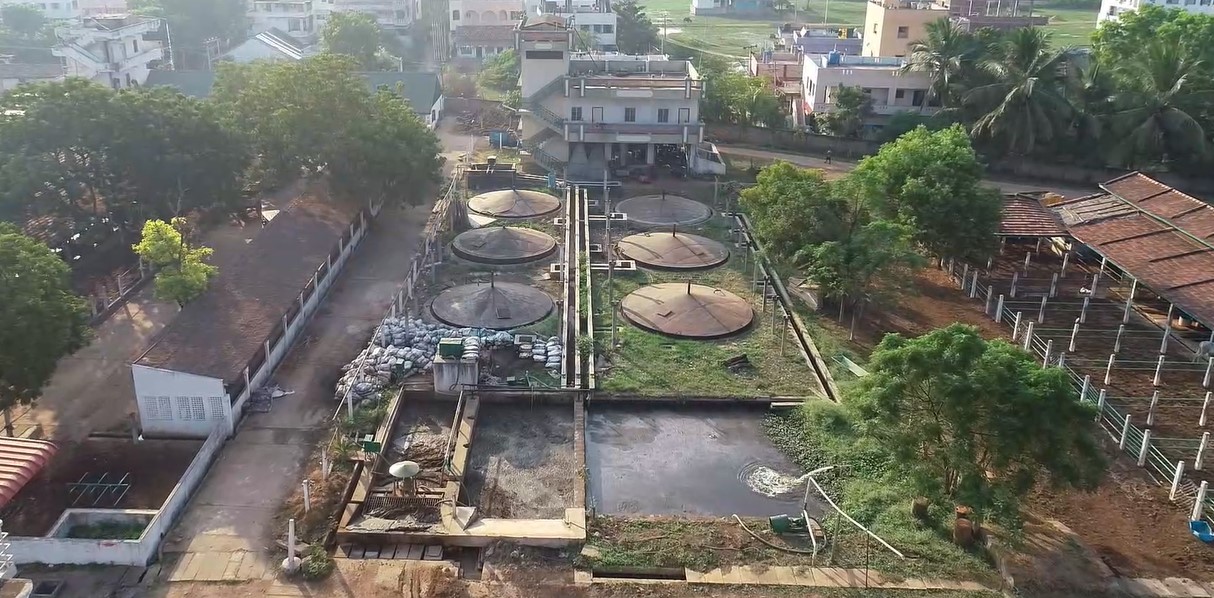
A large biogas plant was established on the college campus in 2008 with the noble objective of converting waste materials into valuable energy resources. The existing plant consists of six digesters, each with a capacity of 85 m³, establishing a total capacity of 510 m³. Initially designed to utilize cattle dung as the primary raw material, the generated biogas is continuously utilized for large-scale cooking in the student mess and partially for clean electricity generation. In response to rising petroleum fuel costs, the dedicated laboratory supports research to maximize yield, purify gas fractions, and compress it into Compressed Biogas (CBG) for sustainable transport fuel.
Objectives
- To closely monitor, audit, and trace the performance values of the existing campus biogas plant grid.
- To systematically enhance and maximize total methane yields through rigorous scientific optimization methods.
- To evaluate, test, and implement targeted purification processes for raw biogas streams.
- To master compression mechanics to convert filtered gas directly into Compressed Biogas (CBG).
Core Practices
- Conducting laboratory-scale digester experiments using diverse biomass inputs co-digested with cattle dung.
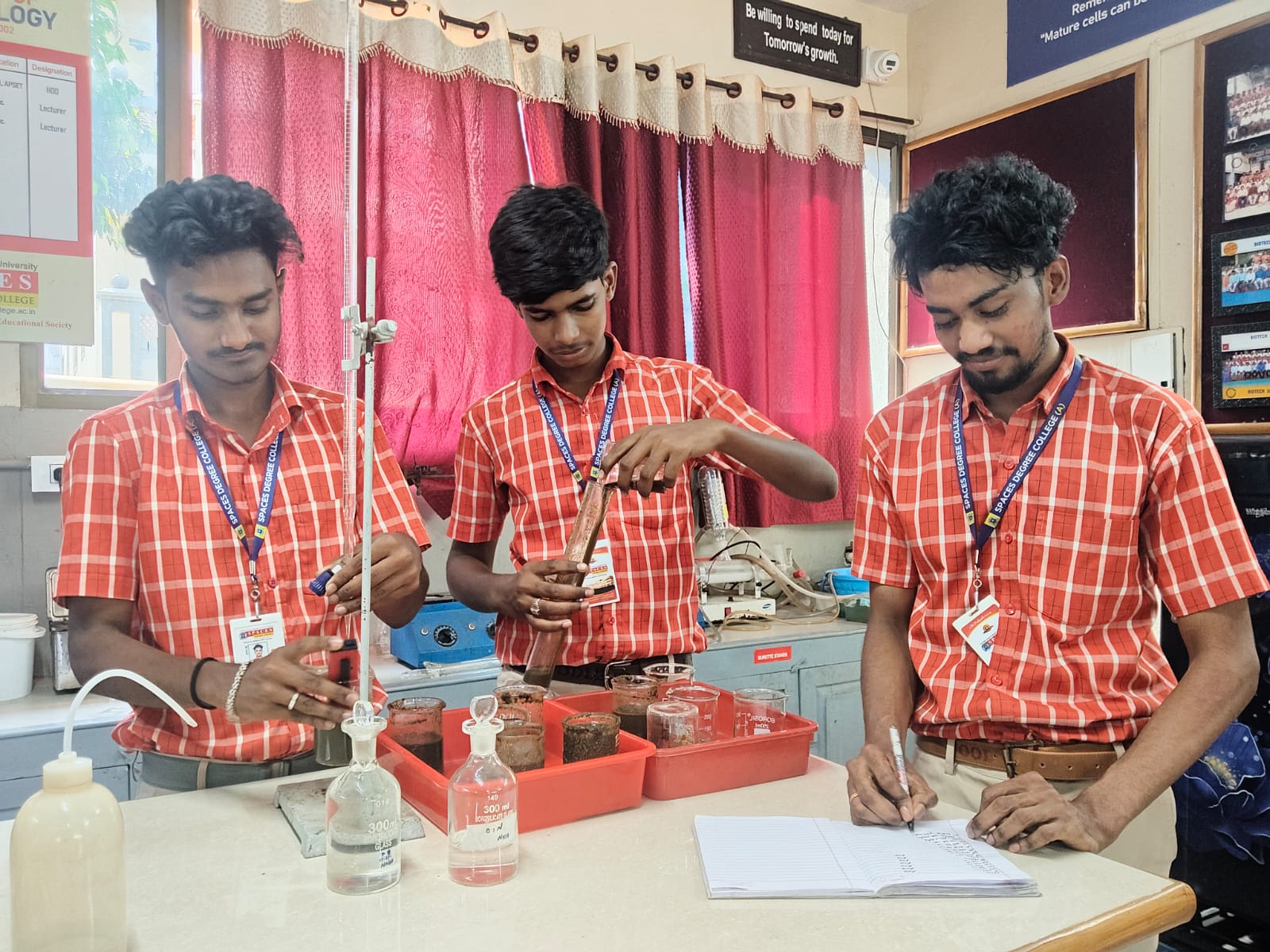
- Monitoring operational stability through chemical titration analyses of baseline pH, alkalinity, and volatile fatty acids (VFAs).
- Estimating Total Solids (TS) and Volatile Solids (VS) content across inlet and outlet slurry lines to measure digestion metrics.
- Evaluating real-time conversion efficiencies of organic volatile carbon loading rates into stable gas forms.
- Analyzing the localized economic feasibility and sourcing logistics of various alternative organic substrates.
- Measuring precision gas composition parameters, targeting specific Methane (CH₄) and Hydrogen Sulfide (H₂S) fractions.
- Studying, testing, and applying chemical/physical scrubbers to optimize gas purity indexes.
- Exploring, configuring, and maintaining pressure systems for the safe compression of purified gas into CBG storage tanks.
Skills Developed
- Technical and laboratory analytics in tracking complex anaerobic digester health parameters and gas mixtures.
- Applied scientific research capabilities for identifying ideal multi-substrate organic co-digestion ratios.
- Deep engineering understanding of large-scale bio-reactor operations and commercial process safety control.
- Advanced theoretical and functional literacy regarding waste-to-energy conversion pathways and green utilities.
- Critical problem-solving models for handling digester acidification or pressure variations.
- Statistical data analysis, graphical logging, and verification of chemical transformation efficiencies.
- Financial budgeting literacy covering biomass logistics management and infrastructure return-on-investment (ROI) analysis.
- Collaborative teamwork, project milestone charting, and operational safety management in multi-phase facilities.
GALLERY


SRI PRAKASH
Sri Prakash - one of the best educational institutes in Andhra Pradesh, empowers students with modern technology through innovative and fun Visualizations, Quizzes and interactive modules for learning. Apart from focusing on overall development, we take pride in creating an environment of excellence on our campus, so that our campus becomes a second home for our students, encouraging them to learn more and more.
Important Links
Student Corner
SPACES @ Press