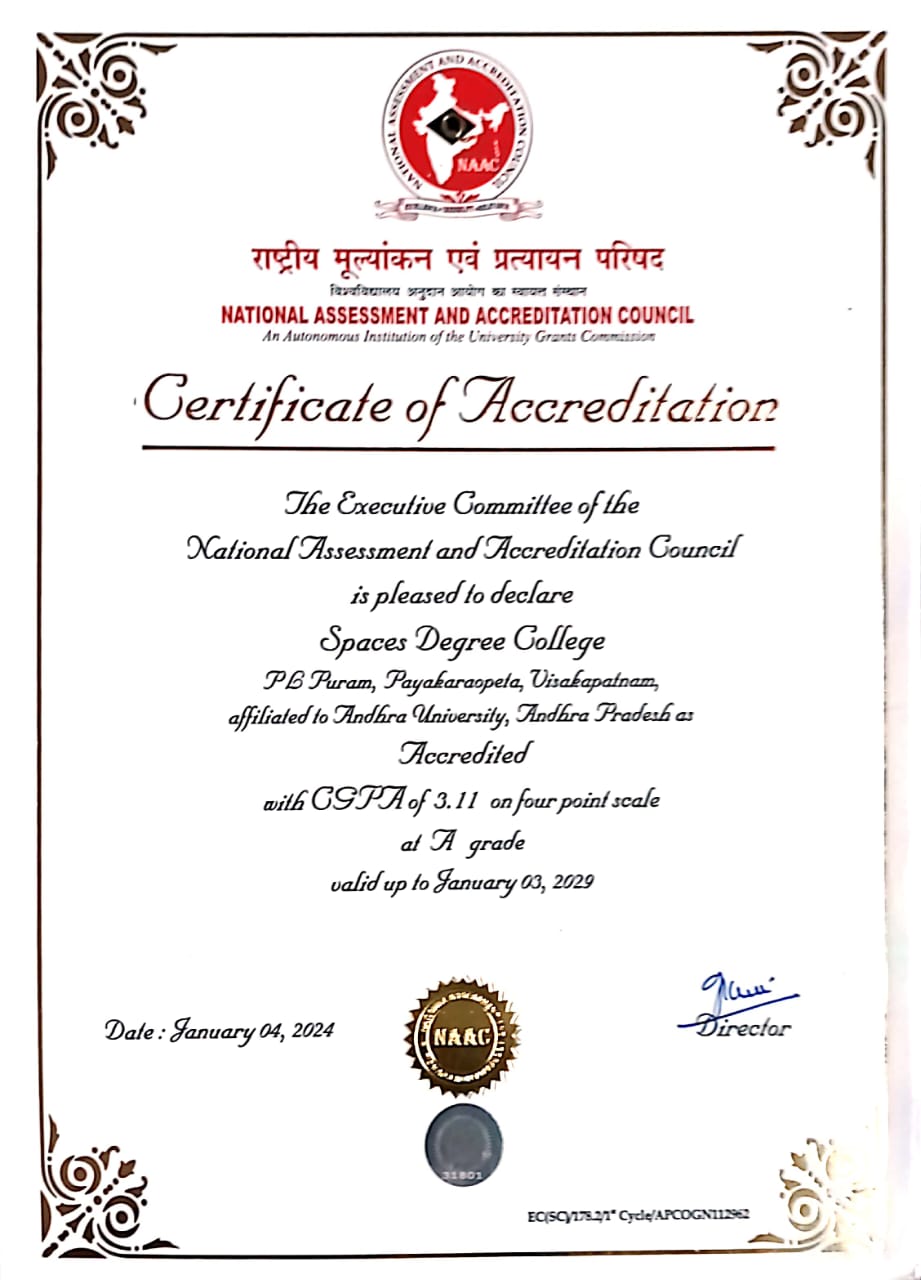
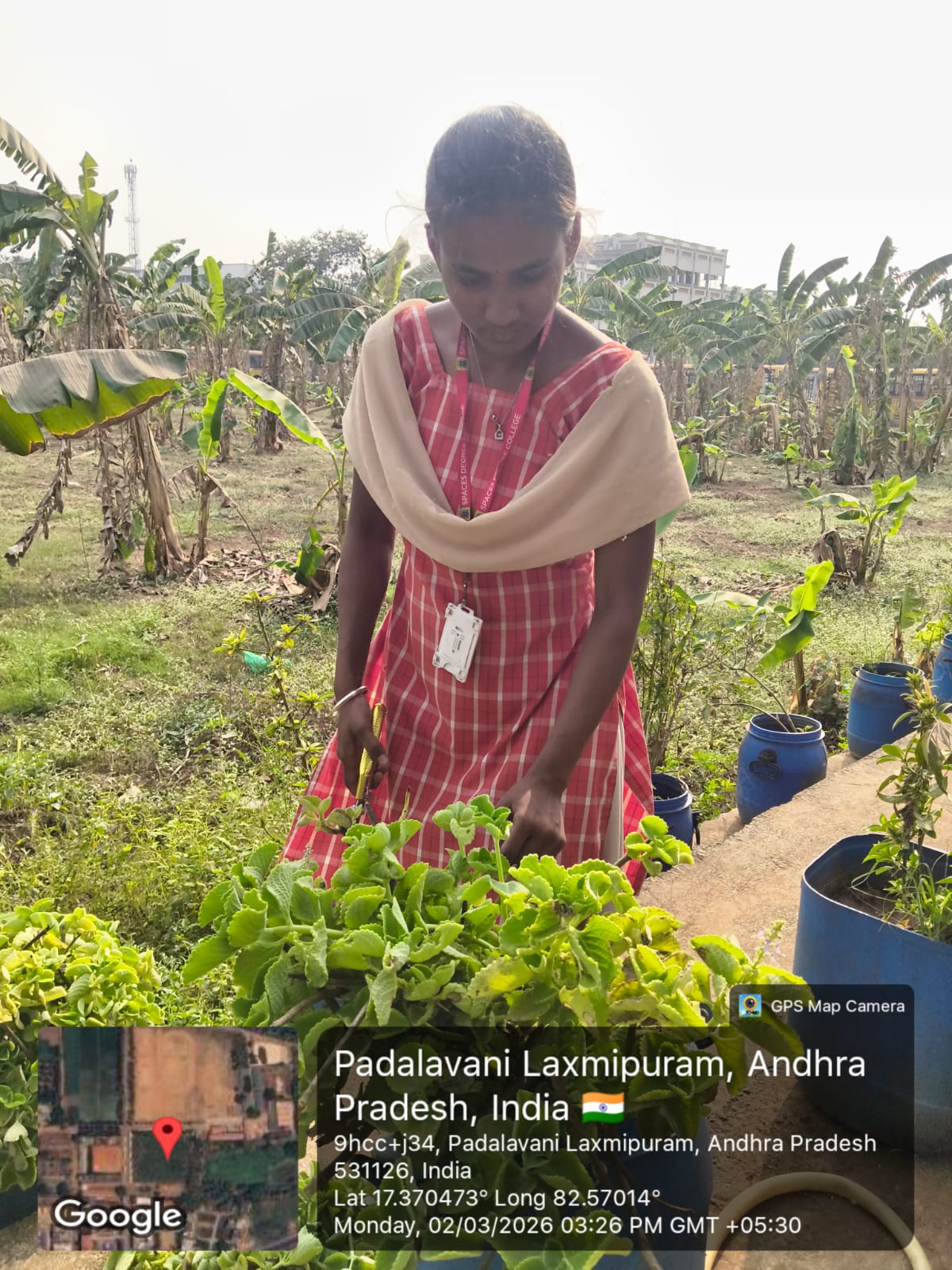
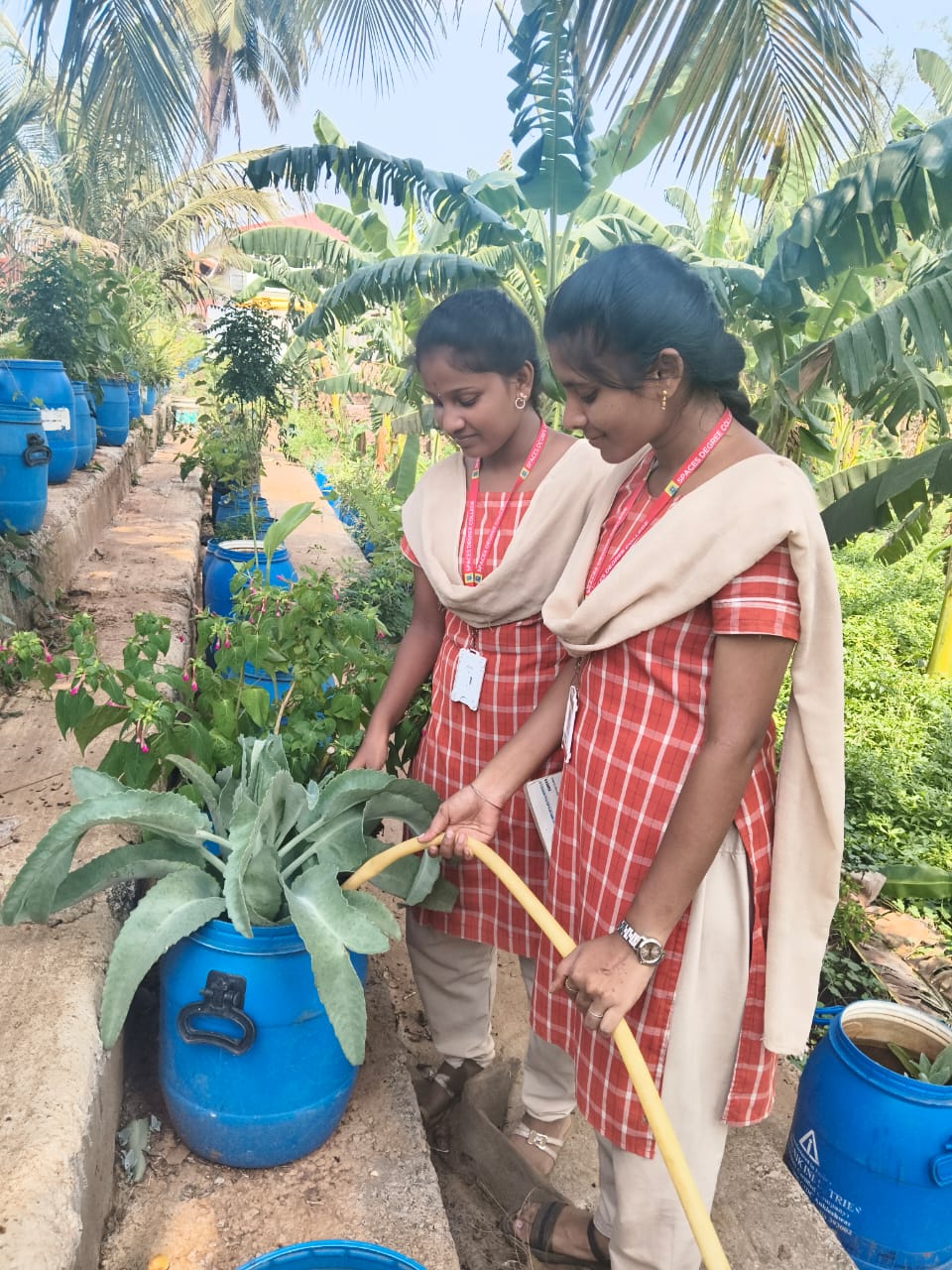
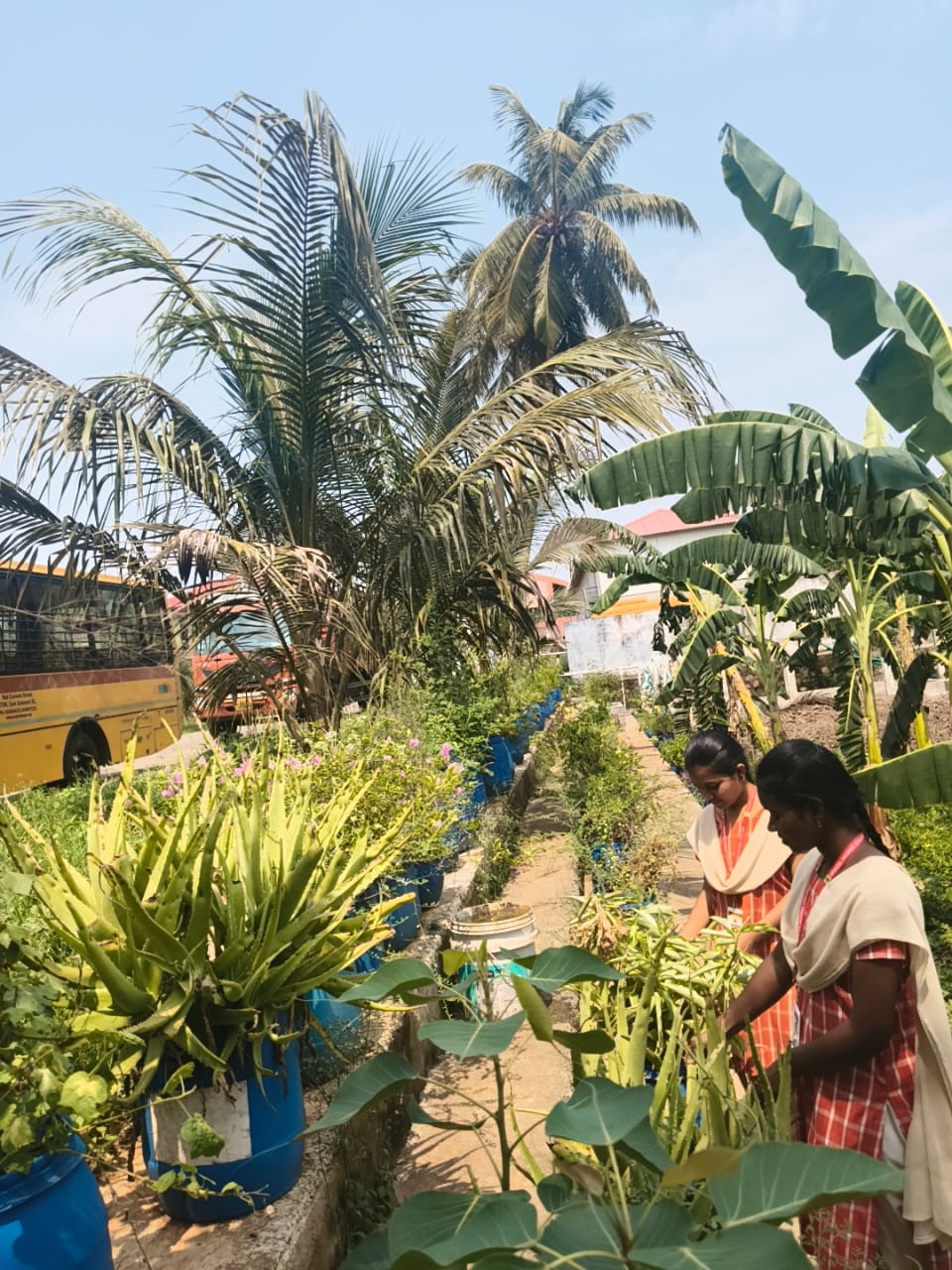
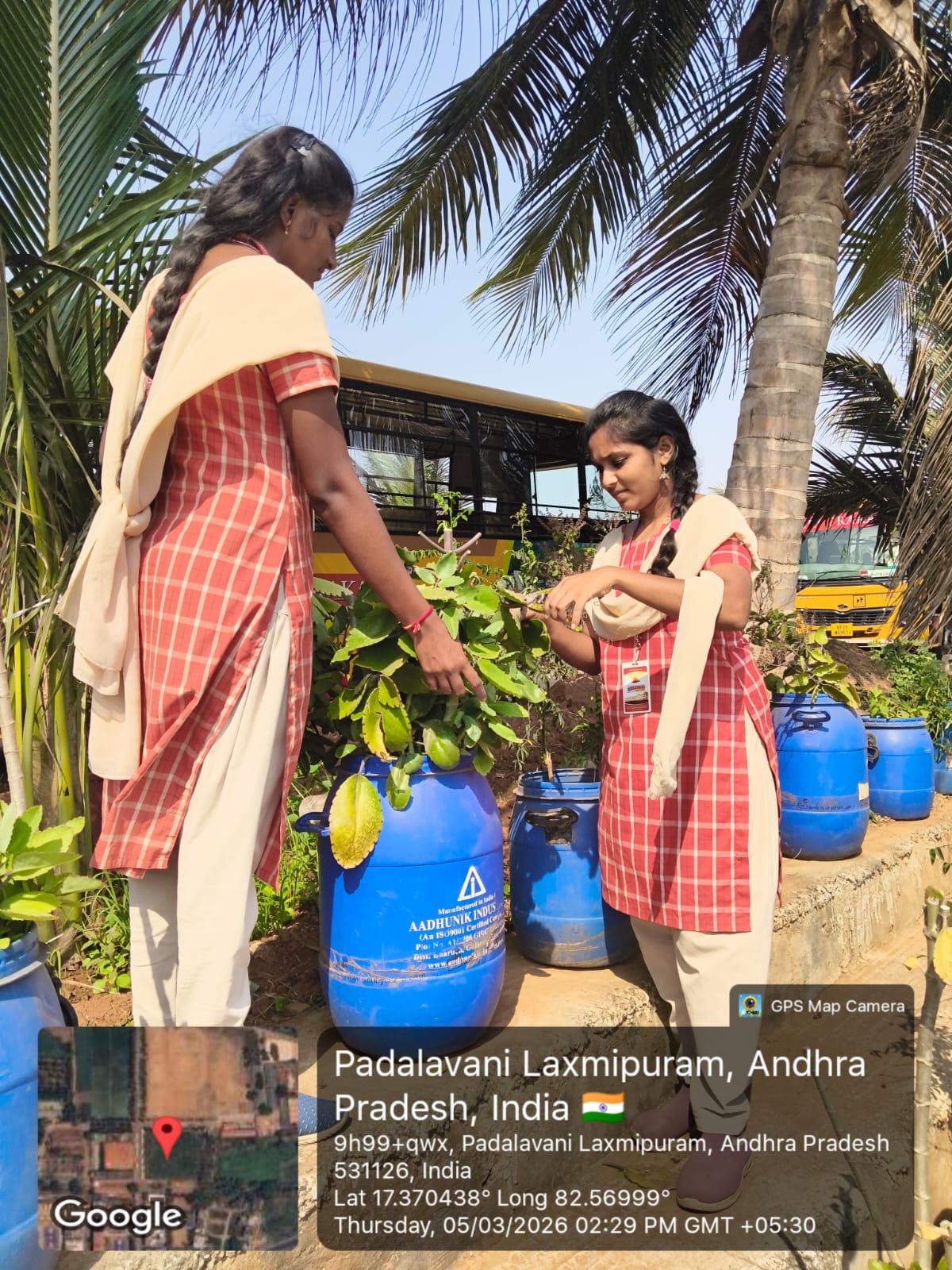
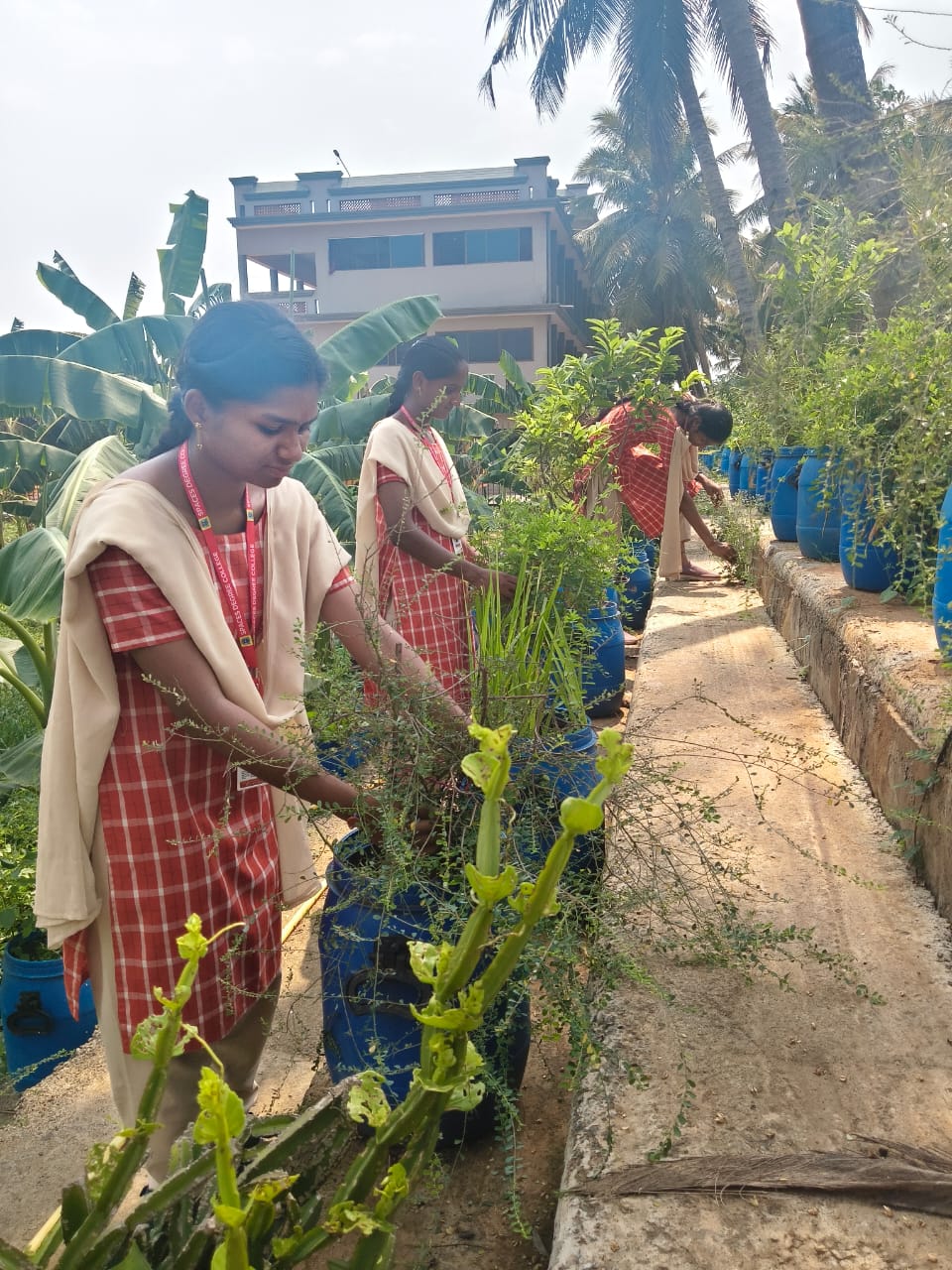
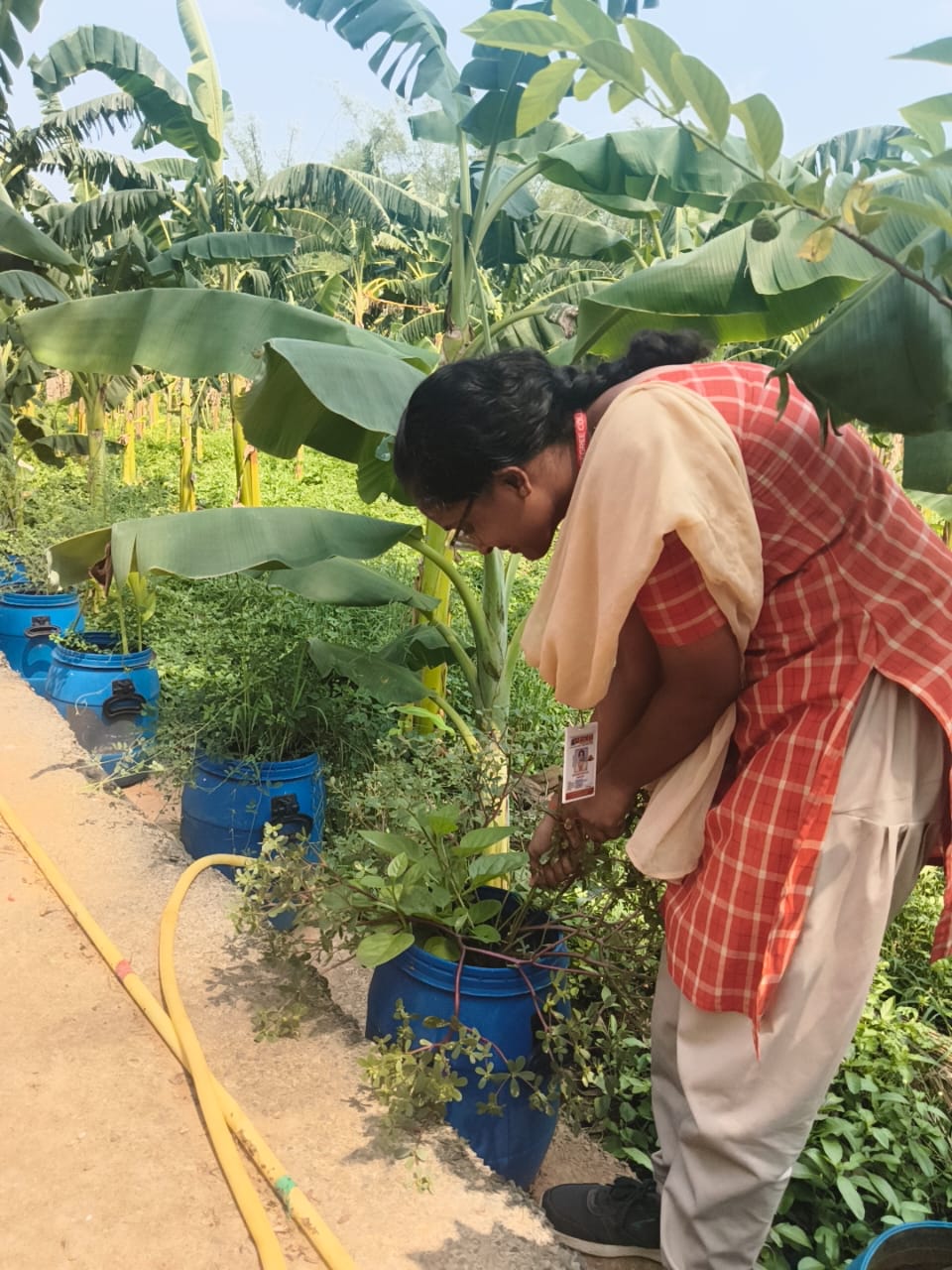
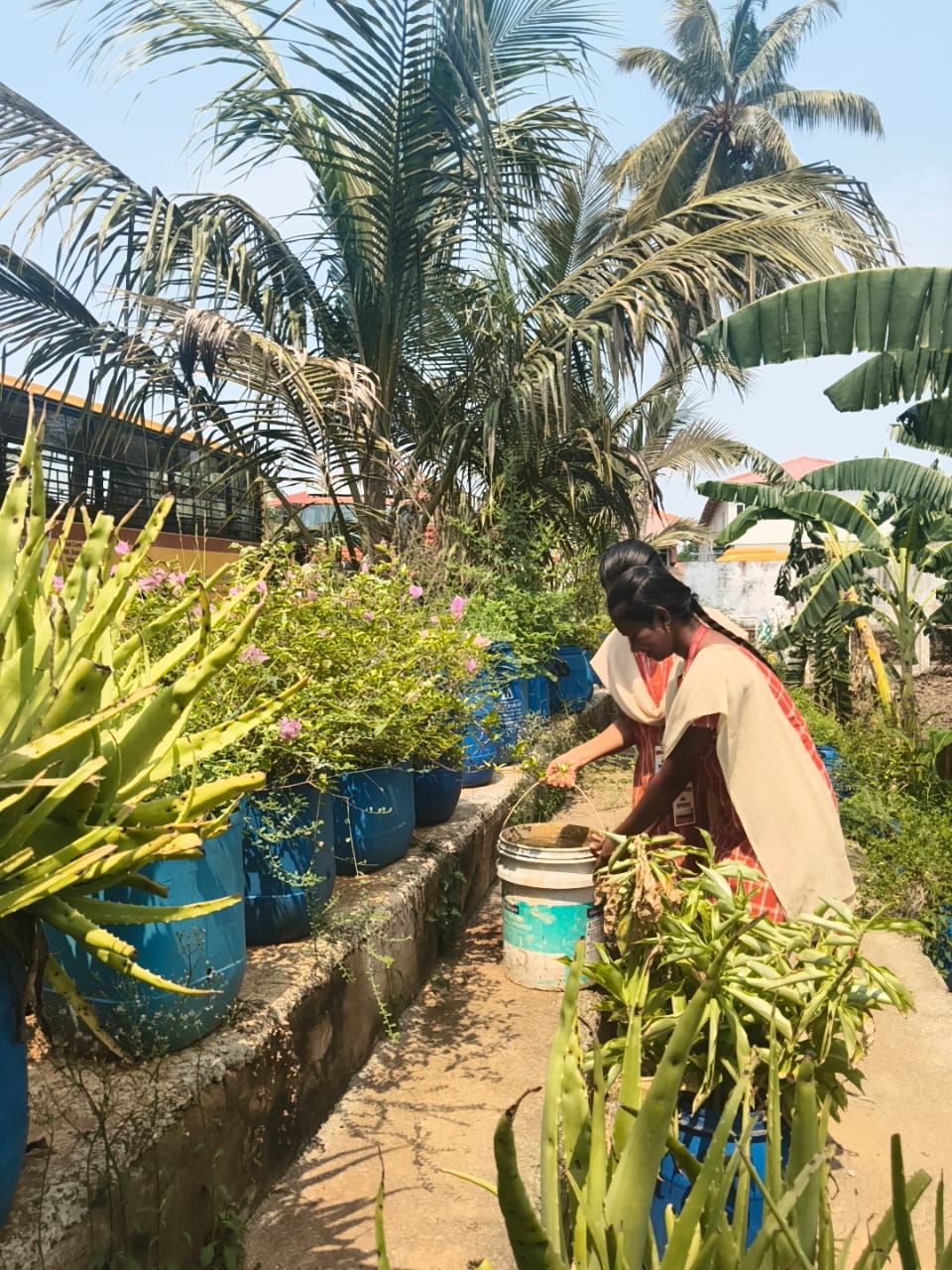
Medicinal plants form an integral cornerstone of traditional healthcare systems, especially within Ayurveda, which relies extensively on chemical-free, plant-based formulations. In response to the global surge in demand for organic and safe cosmetic alternatives, our institution maintains a comprehensive **Herbal Garden** on campus. The facility safely protects and houses approximately **50 distinct botanical varieties cultivated across 200 organized, highly accessible tubs**. This garden serves as a vibrant, functional living laboratory, bridging academic biological research with direct medical support channels.
Objectives
- To systematically cultivate, document, and conserve rare medicinal plant varieties for advanced academic and field study.
- To impart deep working knowledge regarding phytochemical properties and specialized clinical applications across target diseases.
Core Practices
- Executing systematic propagation profiles for a highly diverse selection of valuable therapeutic plants.
- Managing direct logistics lines to supply fresh, unadulterated plant materials to nearby clinical Ayurveda hospitals.
- Designing and delivering local outreach modules regarding the health benefits of native herbal treatments.
- Establishing, maintaining, and scaling a dedicated specialized nursery for Tulasi (Ocimum sanctum) crop strains.
- Providing intensive, hands-on physical training in specialized horticultural practices, soil balancing, and tub cultivation.
Skills Developed
- Taxonomic identification, botanical naming structures, and chemical group classifications of diverse therapeutic flora.
- Practical proficiency across foundational organic horticulture, nutrient dosing, micro-irrigation, and nursery management.
- Deep working literacy regarding eco-friendly conservation models and non-synthetic agricultural cultivation rules.
- Advanced ability to translate textbook theoretical botany parameters cleanly into real-world workspace configurations.
Projected Institutional Outcomes
Academic Importance
- Functions as a live laboratory footprint for multi-disciplinary student research.
- Supports student experimental training, capstone data collection, and plant-diversity mapping.
Environmental Impact
- Optimizes local campus green cover metrics and expands micro-level biodiversity zones.
- Promotes sustainable, zero-waste environmental responsibility across the study body.
Healthcare Support
- Supplies clean, certified chemical-free plant inputs directly to authentic regional medical centers.
- Validates and strengthens the local footprint of time-tested natural healthcare alternatives.
Socio-Economic Value
- Isolates the institution from external market dependencies for rare medicinal raw stocks.
- Cultivates robust local community awareness regarding traditional wellness knowledge paths.
GALLERY


SRI PRAKASH
Sri Prakash - one of the best educational institutes in Andhra Pradesh, empowers students with modern technology through innovative and fun Visualizations, Quizzes and interactive modules for learning. Apart from focusing on overall development, we take pride in creating an environment of excellence on our campus, so that our campus becomes a second home for our students, encouraging them to learn more and more.
Important Links
Student Corner
SPACES @ Press